
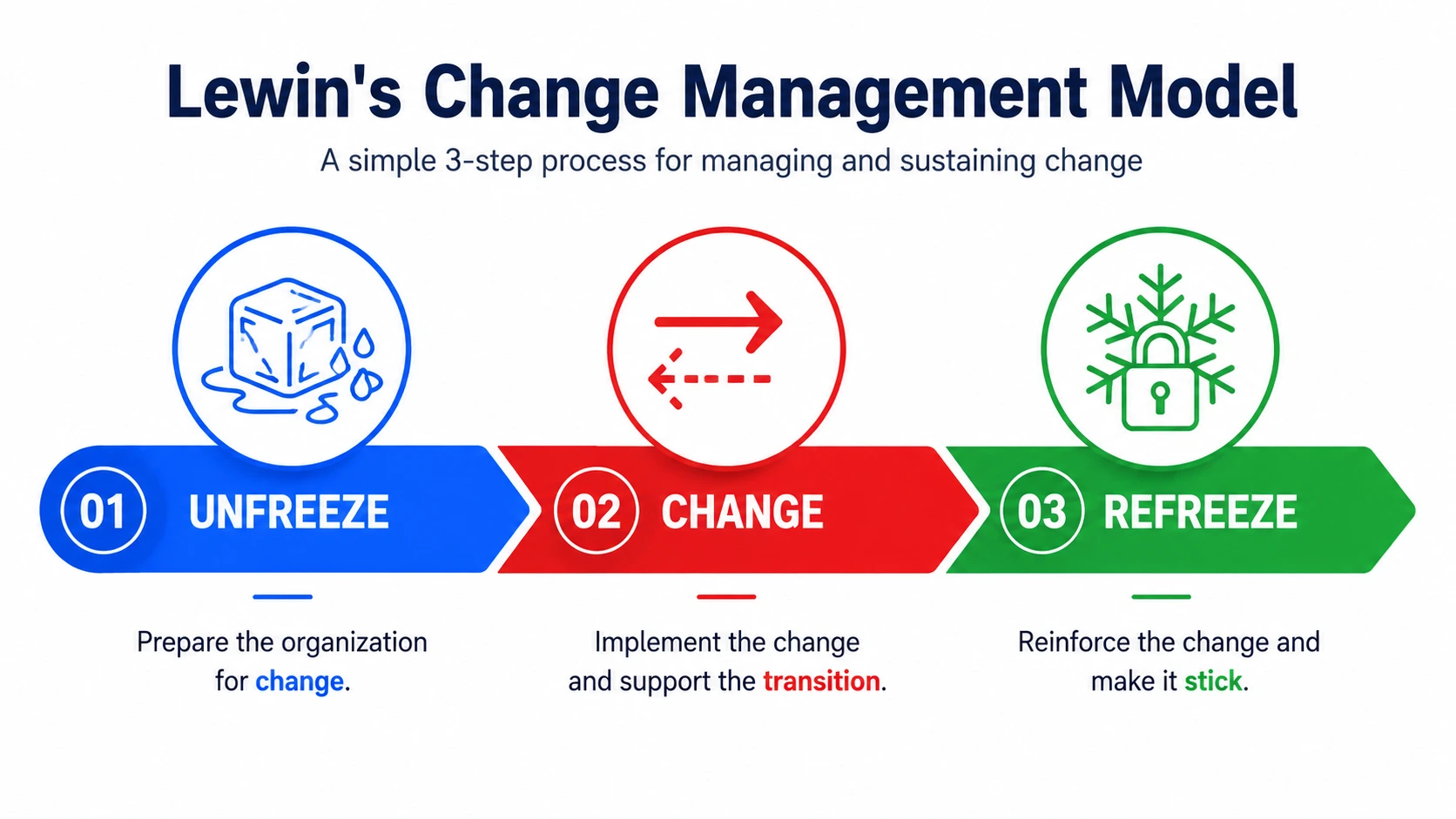
The Core Model
Psychologist Kurt Lewin's three-step model has shaped change management for decades. It treats change as something people move through step by step, not something leaders simply announce.
Unfreeze: build a case for the change and help people loosen their grip on the old way before asking them to move. Skip this step, and every step after it meets quiet resistance.
Change: the transition itself, where new tools, habits, or ways of working get introduced and practiced. It's normal for this stage to feel messy before it gets easier.
Refreeze: lock in the new way so it sticks once everyone's attention moves elsewhere. Otherwise, people slowly drift back to old habits.
Watch For
Announcing a change without explaining why the old way stopped working. People don't resist change itself, they resist losing something without an explanation.
Reinforce
Naming what will stay the same, not just what's changing. Knowing what's stable helps calm the anxiety about what isn't.
Try This Week
Write your next change announcement's "why now" in one simple sentence. If you can't, your team won't understand it either.
Why It Matters
Change management isn't just paperwork. It affects how much a transition costs a business in time and energy. Companies that go through unfreeze, change, and refreeze see faster adoption, fewer people going back to old habits, and less frustration during the switch. Skipping the unfreeze step doesn't make things faster, it just pushes the resistance to after launch, where it's harder to spot and more expensive to fix.
On The Floor
A department switches to a new CRM system. Leadership sends one email with login details and a launch date, but never explains why the old system is going away. Two weeks later, half the team is still using the old spreadsheet, because nobody made the case for the change or gave them time to practice. A manager notices this, sets up two hands-on training sessions, and clearly explains why the switch matters. Within a week, more people are using the new system, not because the tool changed, but because people finally understood why it mattered.
Reflect
Think of a recent change that didn't stick. Which step, unfreeze, change, or refreeze, got skipped?
What's one habit or process your team would go back to tomorrow if nobody was watching?
Illustrative workplace case study
A composite learning example from the original issue, rather than a verified client result.
A composite example drawn from common workplace situations in HRDC Claimable change management workshops. A finance team switched to a new digital approval system after years of using email for sign-offs. The system launched on time, but almost nobody used it. The training covered how to use the tool, but never explained why email approvals had become a problem, or what would happen to the old process. Without that context, most staff treated the new system as optional. The team lead paused the launch for two weeks, held a short session explaining the specific problems, like lost approvals and no paper trail, that the new system fixed, and set a clear date after which email sign-offs would no longer count. Nine out of ten people were using the new system within a month.
Takeaways
Skipping the unfreeze step doesn't speed up change, it just delays the pushback.
People need to know what's being replaced, not just what's new.
A clear deadline does more for adoption than a dozen reminder emails.