
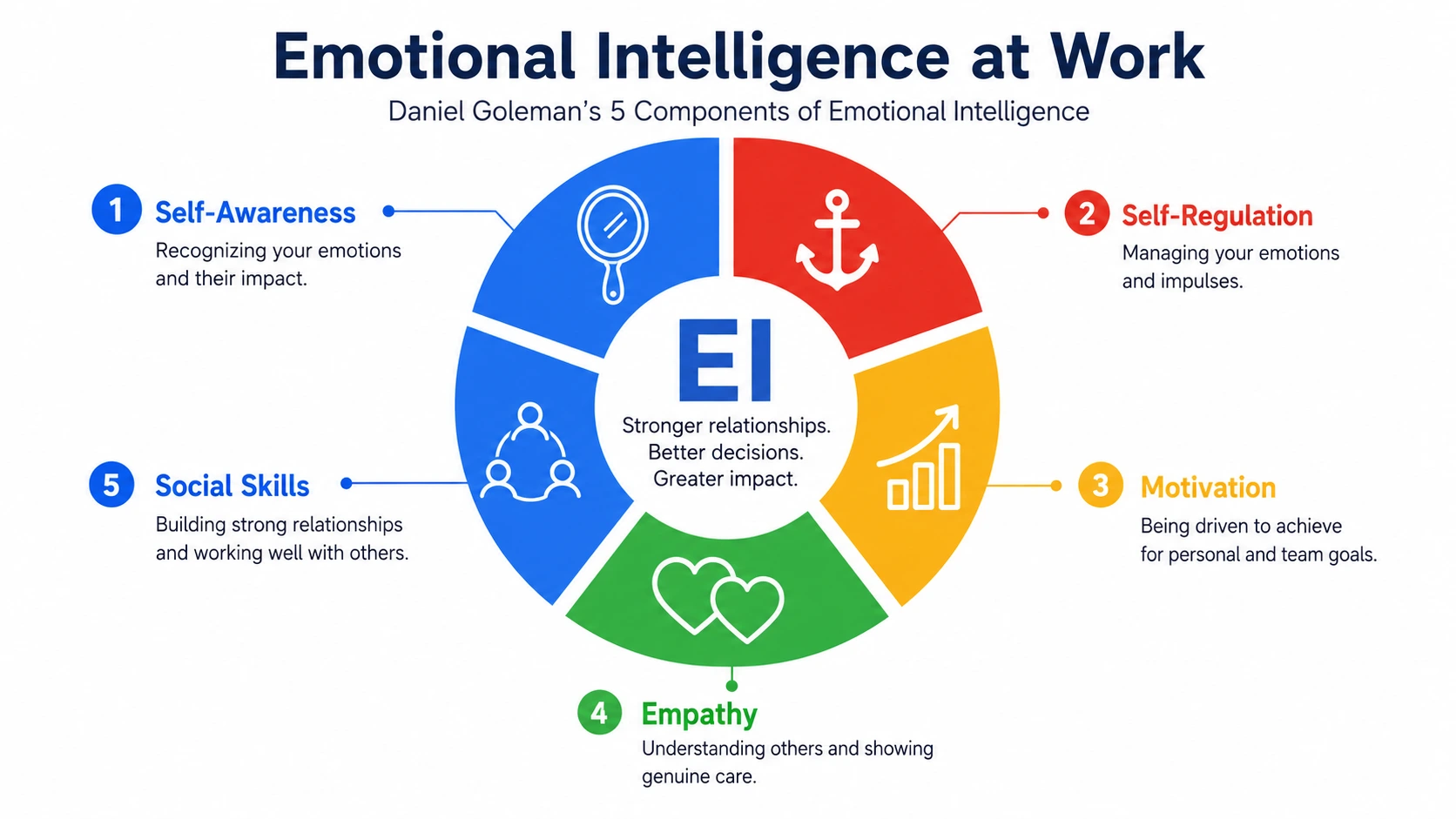
The Core Model
Psychologist Daniel Goleman broke EI down into five parts. Companies use this model a lot because you can actually see and coach each part, not just talk about it.
Self-Awareness: noticing your own emotions and how they affect your work and the people around you.
Self-Regulation: managing your impulses and emotions, especially when you're under pressure.
Motivation: wanting to do well because it matters to you, not just for a reward or praise.
Empathy: noticing how others feel and using that when you talk to them.
Social Skills: building relationships and working well with others toward a shared goal.
Watch For
Reacting before you notice how you feel. Waiting a moment before you respond is still a choice. Reacting right away usually isn't.
Reinforce
Naming your feeling before naming the problem. Saying “I'm frustrated because...” starts a conversation instead of a fight.
Try This Week
Take one breath before you reply in a tense moment. It's small, but it changes what happens next.
Why It Matters
EI isn't just a nice extra skill, it shows up in real results. Teams with emotionally intelligent managers keep more employees, solve conflicts faster, and work better across departments. When it comes to performance, staying calm under pressure is often what separates a manager who calms down a crisis from one who accidentally makes it worse.
On The Floor
A team lead gets surprised in a meeting: a project she thought was on track is now two weeks behind, and her name is on it. She notices how she feels (“I'm caught off guard and a little embarrassed”), takes one breath, and asks, “Can you walk me through what changed?” The meeting shifts from blame to problem-solving, because one person stayed calm first.
Reflect
Think of a time you reacted before noticing how you felt. What would naming it have changed?
Which of the five parts (Self-Awareness, Self-Regulation, Motivation, Empathy, Social Skills) do you most want to grow?
Illustrative workplace case study
A composite learning example from the original issue, rather than a verified client result.
A composite example drawn from common workplace situations in HRDC-sponsored EI workshops. A regional operations team got a lot done, but their meetings were tense. Two senior engineers kept clashing, and newer staff started staying quiet instead of speaking up. The team lead didn't start with a new process. She started with self-regulation and empathy: she coached both engineers to name their frustration instead of using sarcasm, and she rebuilt the habit of asking newer staff for their input before decisions were made. After a few months, meetings got shorter, more people spoke up, and both engineers said they felt less “on guard” during planning. The work itself didn't change much. What changed was how much energy people spent managing tension instead of doing the work.
Takeaways
The fix wasn't a new process. It was two people learning to stay calm before they spoke.
Newer staff felt safer speaking up once the senior conflict cooled down.
Coaching on EI paid off in energy and people staying on the team, not just visible results.