
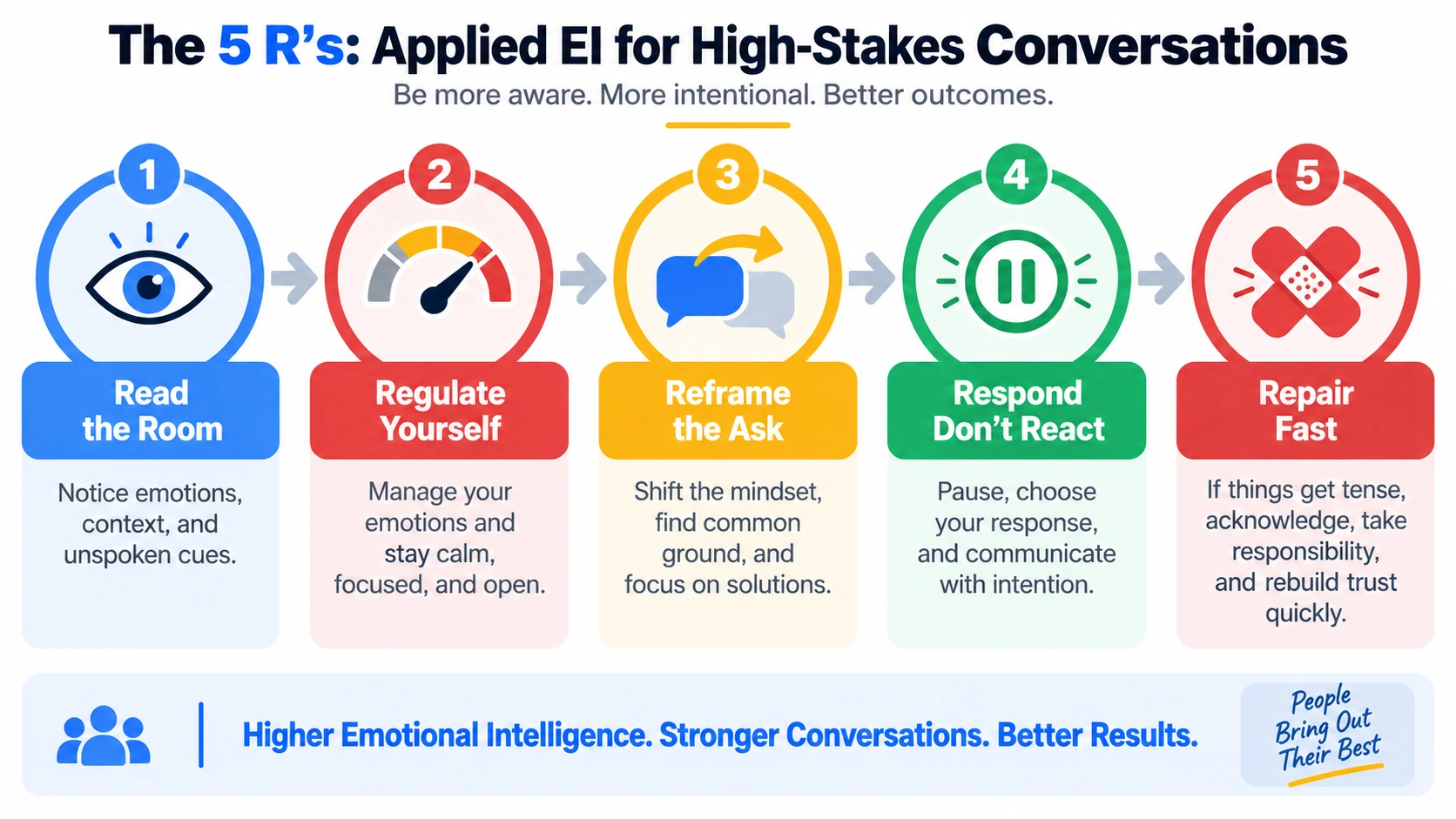
The Core Model
Interviews, stakeholder pitches, and grant panels are all evaluation conversations: someone else holds the decision, and your job is to manage yourself while reading them accurately. This 5-step applied model adapts Goleman's EI components into behaviors you can use in the room.
Read the Room: notice the evaluator's tone, pace, and priorities before you speak, not just your rehearsed answer.
Regulate Yourself: manage nerves or frustration so they don't leak into your voice, posture, or answers.
Reframe the Ask: translate what you want (funding, the offer, budget approval) into what they need to hear to say yes.
Respond, Don't React: pause before answering a hard or unexpected question; a considered answer beats an instant one.
Repair Fast: recover smoothly from a stumble or an awkward silence instead of dwelling on it.
Watch For
Rehearsing your pitch so hard that you stop listening to what the panel or interviewer is actually asking.
Reinforce
Naming pressure internally before you speak. “I'm nervous, and that's fine” keeps it from leaking into your delivery.
Try This Week
Before your next interview, stakeholder meeting, or grant panel, write the other side's priority in one sentence, then check your pitch answers it.
Why It Matters
Across academia and industry, the ability to stay composed and read an audience under evaluation is often what separates equally qualified candidates. A strong proposal can lose funding to a less polished one delivered with confidence, and a manager with the right numbers can lose stakeholder buy-in if frustration shows in a tense meeting. EI under evaluation isn't about hiding emotion, it's about using it as information instead of letting it drive the conversation.
On The Floor
A candidate is midway through a grant panel when a reviewer challenges her methodology in a sharp tone. She notices her chest tighten, takes one breath, and says: “That's a fair concern, here's how we tested for that.” The panel's energy shifts from skeptical to engaged, because she read the challenge as a question to answer, not an attack to survive.
Reflect
Think of an interview, pitch, or panel where you reacted before you noticed what you were feeling. What would naming it in the moment have changed?
Which of the 5 R's (Read, Regulate, Reframe, Respond, Repair) is your current growth edge going into your next evaluation conversation?
Illustrative workplace case study
A composite learning example from the original issue, rather than a verified client result.
A composite example drawn from common patterns in interview and stakeholder-readiness coaching. A postdoctoral researcher had a strong publication record but had been turned down for two grants in a row. Feedback from panel members was consistent: the science was solid, but her answers to tough questions felt defensive. Coaching focused on two of the 5 R's: reading the panel's actual concern behind each question, and pausing before responding instead of jumping straight to justification. She practiced naming pressure internally (“I feel challenged right now”) before answering, which slowed her down just enough to answer the real question instead of the one she had rehearsed for. On her next panel, a reviewer raised the same methodology concern that had derailed her before. She paused, reframed it as a fair question, and answered it directly. The panel's tone changed mid-conversation. She was awarded the grant, and reviewers specifically noted her composure under questioning.
Takeaways
Technical strength alone doesn't win evaluation conversations, composure under challenge does.
A 3-second pause before responding to a hard question changes the outcome more than a rehearsed answer.
Reading the real concern behind a tough question matters more than defending your original pitch.