
The Core Model
Researchers separate empathy into a thinking route and a feeling route. Knowing which one you are using, and which one the moment actually calls for, is what turns a vague intention to be supportive into something the other person can notice.
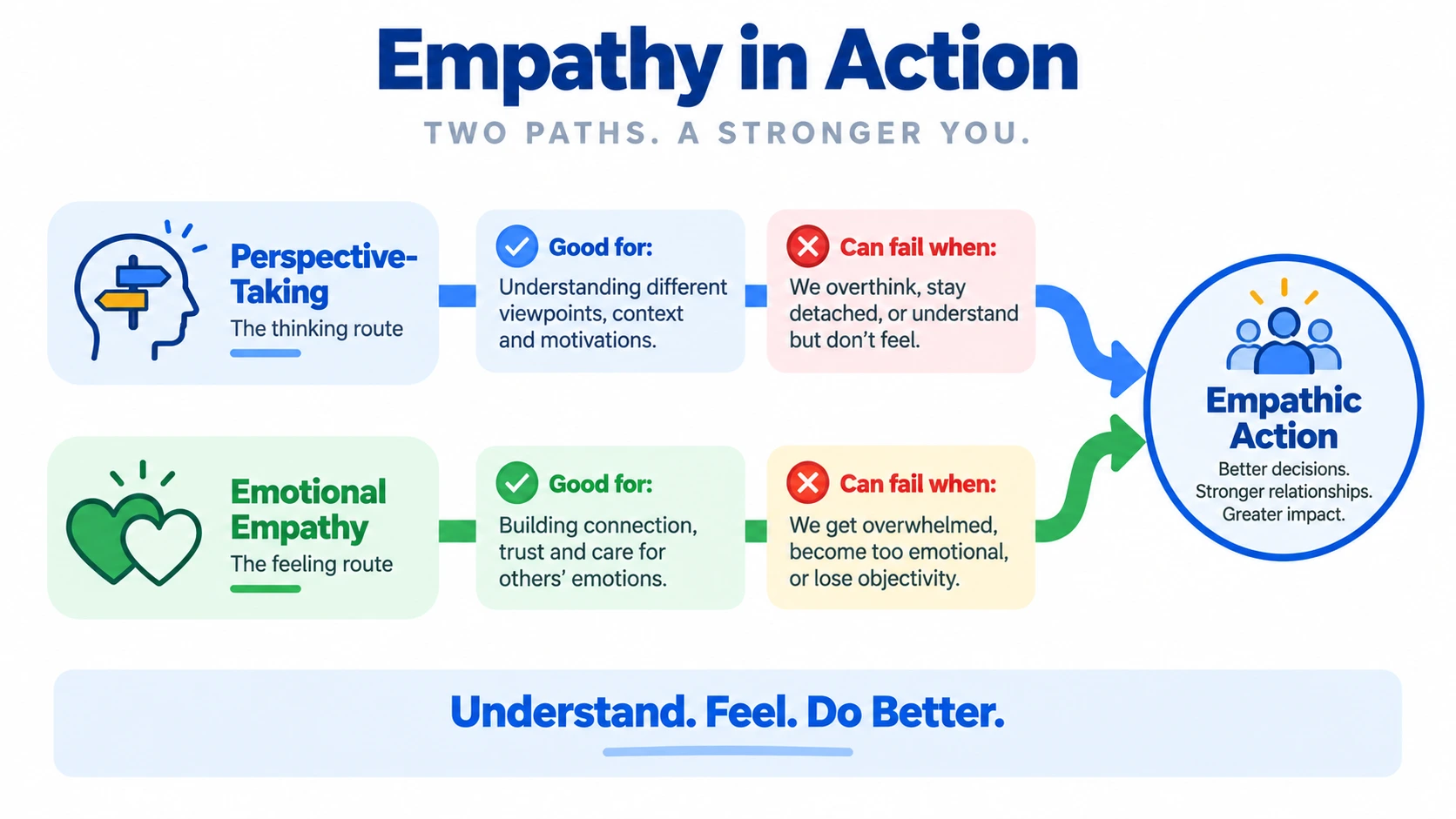
Perspective-Taking: the thinking route. Working out how the situation looks from where the other person stands, including pressures you cannot see from your own desk.
Emotional Empathy: the feeling route. Picking up something of what the other person feels, so your response carries warmth and not just accuracy.
Choosing the route: perspective-taking travels further in negotiation, planning, and conflict. Emotional empathy matters more when someone needs to feel accompanied rather than solved.
The failure modes: perspective-taking on its own reads as cold and clinical. Emotional empathy on its own slides into over-identification, and eventually burnout.
Empathic action: neither route counts for much until it changes what you do next. Empathy the other person cannot observe is hard to tell apart from indifference.
Watch For
Jumping to a fix before the other person has finished. Solving early often lands as dismissing.
Reinforce
Checking your read out loud. “It sounds like the deadline is the worrying part” lets them correct you.
Try This Week
In one conversation, name what you think the other person is feeling before offering any advice.
Why It Matters
Empathy has a reputation as the soft end of management, which gets it precisely backwards. Most escalations, grievances, and quiet resignations begin with somebody concluding that nobody understood their position. Perspective-taking is what stops that conclusion forming, and it can be practised deliberately. Emotional empathy is what makes people willing to bring you a problem early, while it is still small. Teams with both tend to hear bad news sooner.
On The Floor
A supervisor is told by a team member that she cannot take the Saturday shift again. His first instinct is to explain the roster constraints. Instead he asks what Saturdays look like for her, and learns she has been covering a family care arrangement for two months without mentioning it. He still cannot remove the shift entirely, but he moves her to the earlier slot and swaps one weekend out. Nothing about the roster got easier. What changed is that she stopped rationing what she told him.
Reflect
Think of someone you find difficult to work with. What pressure might they be under that you have never actually asked about?
Which route do you default to: working out how someone sees it, or feeling it with them? What does that default cost you?
Illustrative workplace case study
A composite learning example from the original issue, rather than a verified client result.
A composite example drawn from common workplace situations in HRDC-sponsored emotional intelligence workshops. A customer service team was measured almost entirely on call handling time. Complaints kept arriving, but not about the answers being given, which were usually correct. They were about the manner of the people giving them. The team leader stopped coaching tone. Instead she asked each agent, before responding, to say in one sentence what the customer was most worried about. Not the request itself, the worry sitting underneath it. Handling time rose slightly. Repeat calls fell further, because customers stopped ringing back to explain themselves a second time. Agents also reported that the work felt less adversarial, which showed up in the team's own turnover before it showed up anywhere else.
Takeaways
Coaching the read rather than the tone changed how the conversations actually went.
A small loss in speed bought a larger reduction in repeat contact.
The benefit appeared in staff retention as well as in customer numbers.